VIN on vehicle matches the title and available records
Buyer walkaround tool
Used Car Inspection Checklist
Use this used car inspection checklist to organize observations before, during, and after a test drive. It helps you note questions; it cannot diagnose a vehicle.
A visual checklist is not a mechanical diagnosis or professional inspection.
Your inspection notes
0% checked
0 of 57 items reviewed
Total 57Checked 0Looks OK 0Needs attention 0Major concerns 0
Vehicle identity & paperworkConfirm the vehicle and available records match what you are being offered.0/5
Ask who holds the title and whether it is clear, branded, or subject to a lien
Ask how long the seller has owned the vehicle and why they are selling
Review available maintenance and repair records
Review a vehicle-history report, if available, and ask about gaps or reported events
Exterior & bodyLook for visible condition differences; appearance cannot confirm hidden repairs.0/6
Look for uneven panel gaps, mismatched paint, or overspray
Check body panels for dents, corrosion, bubbling, or repair signs
Check windshield and other glass for cracks, chips, or poor repairs
Inspect headlamps, tail lamps, lenses, and visible light operation
Open and close doors, hood, trunk, or liftgate
Look for damp carpets, water lines, or musty odors
Tires & wheelsCompare condition across all tires, including the spare if equipped.0/4
Compare tire tread depth and look for uneven wear
Look for cracks, bulges, plugs, or sidewall damage
Note whether tires are a similar type and age
Check for a spare or tire-inflation kit and basic tools
Under the vehicleOnly inspect areas you can see safely; do not crawl under an unsupported vehicle.0/3
Look from the side for fresh fluid spots or visible leaks
Look for visible exhaust damage, hanging parts, or heavy corrosion
Note visible underbody damage or corrosion without lifting the vehicle
Engine bayMake observations only; do not touch hot or moving parts.0/4
Look for obvious low, dirty, or contaminated-looking fluids if accessible
Look for visibly cracked hoses, damaged wiring, or worn belts
Look for residue or wet areas around the engine bay
Ask about non-factory modifications and related records
InteriorCheck comfort, wear, odors, and evidence of moisture.0/5
Check seat belts for visible damage and ordinary operation
Compare seat, steering wheel, and pedal wear with the stated mileage
Note smoke, mildew, fuel, or strong masking odors
Check floor mats, carpets, and trunk area for dampness or staining
Open storage compartments and inspect for damage or missing items
Electronics & controlsTry common features and note anything intermittent or inoperative.0/5
Test power windows, locks, mirrors, and seat adjustments
Test air conditioning and heat through available settings
Check audio, display, navigation, and phone connection if equipped
Check reverse camera and parking sensors if equipped
Test wipers, washers, horn, outlets, and interior lights
Start-up checksWatch the dashboard and listen from a normal standing position.0/4
Observe whether warning lights illuminate at start and then behave as expected
If practical, ask to see a cold start and listen for unusual noises
Notice rough, unstable, or unusually noisy idle behavior
Note persistent unusual exhaust smoke or strong odors
Test driveDrive only with permission, a valid license, and appropriate insurance arrangements.0/5
Use a route with low-speed streets and, if appropriate, a faster road
Notice delayed, harsh, or inconsistent transmission behavior
Observe whether acceleration feels consistent for the vehicle
Check mirrors, blind spots, seating position, and visibility
Listen for unusual road, wind, drivetrain, or wheel noises
Braking, steering & suspension observationsThese are observations, not a mechanical diagnosis.0/4
Note braking noise, vibration, pulling, or inconsistent pedal feel
Notice steering pull, vibration, looseness, or unusual effort
Listen for clunks over ordinary road surfaces and note ride behavior
Observe whether the vehicle tracks straight on a suitable level road
After the test driveRecheck for changes after the vehicle has been driven.0/4
Restart the vehicle and note any change in starting behavior
Look for new fluid spots or odors after parking
Notice any temperature warning or unusual smell
Compare seller answers with your observations and records
Questions for the sellerAsk for clear answers and supporting records where possible.0/5
Ask about collisions, repairs, flood exposure, and structural work
Ask what maintenance is due and what was recently completed
Ask whether any known issues or warning lights are present
Confirm keys, manuals, accessories, and items included in the sale
Clarify the written sale terms, payment method, and delivery timing
Professional inspection follow-upArrange an independent inspection if you want a deeper mechanical assessment.0/3
Ask whether an independent mechanic may inspect the vehicle
Request written estimates for issues that could affect your decision
Consider a marque specialist for complex or specialty vehicles
Items to discuss
No items are currently flagged. A blank checklist is not an inspection result.
Notes stay in this page session only; nothing is saved to an account or sent to a server.
CarBuyerKit observation summary: statuses and notes reflect only the observations entered by the buyer. This checklist is not a mechanical diagnosis, does not establish that a vehicle is safe or sound, and does not replace a qualified pre-purchase inspection. Hidden defects may not be visible.
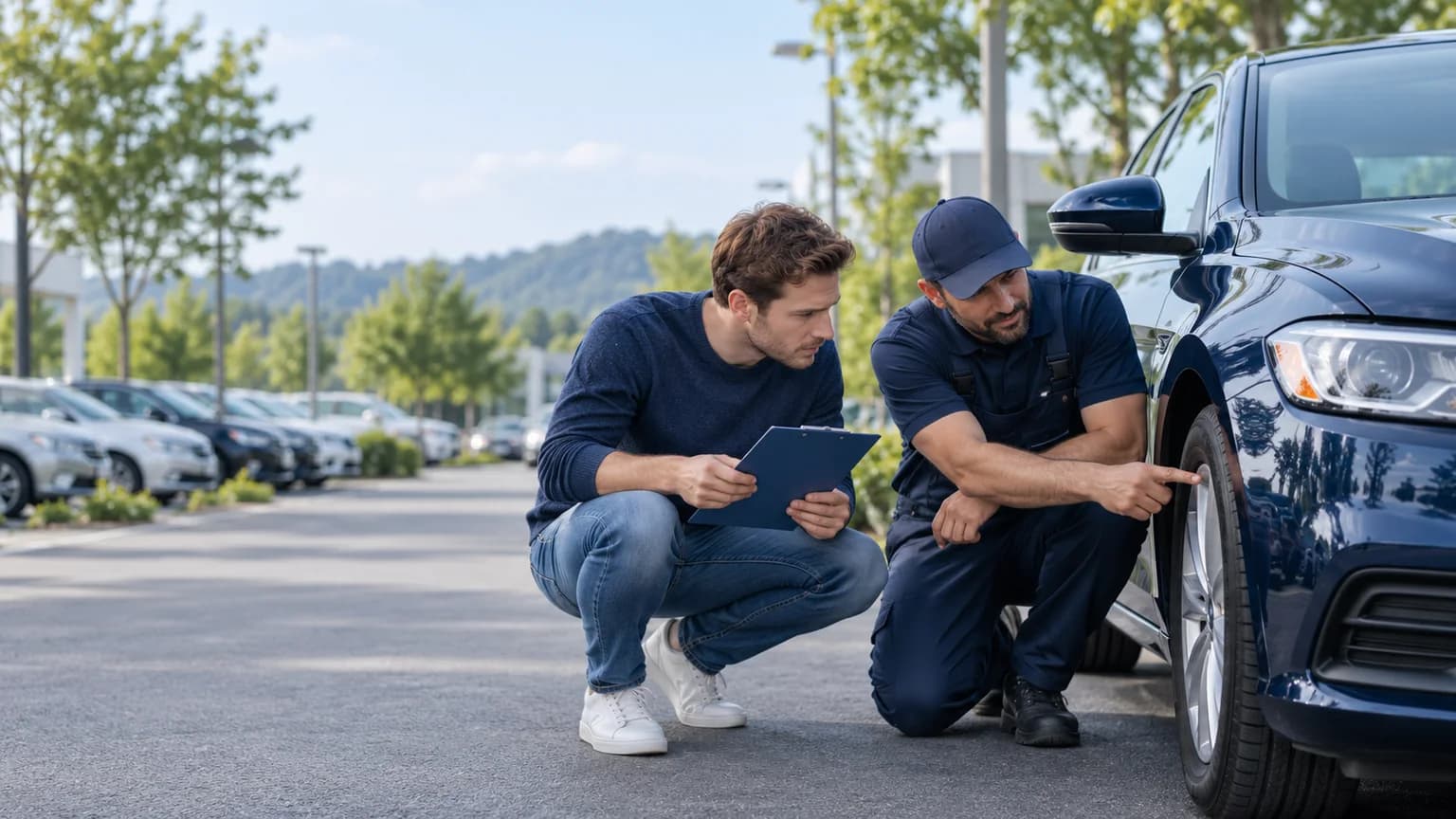
A pre-purchase car inspection checklist helps you review paperwork, visible condition, basic controls, start-up behavior, and test-drive observations in a consistent order. Record questions and arrange a professional inspection for a deeper mechanical assessment.
How to use this used vehicle inspection checklist
- Ask the seller for permission to inspect and drive the vehicle, and follow any dealership or owner requirements.
- Work through the categories in order. Mark an item “Looks OK” only to record your observation, not to certify the vehicle.
- Use “Needs attention” or “Major concern” to flag a question, then add a brief note while the detail is fresh.
- Discuss flagged observations with the seller and an independent mechanic before making a decision.
- Print a summary if useful. The checklist is not saved after you leave or reload this page.
What to inspect before starting the car
Begin with the VIN and paperwork. Check that the vehicle identification number on the car matches available title documents. Ask whether the title is clear or has a lien or brand, and review service records and a vehicle-history report if available. A report can contain useful clues, but an unreported event or repair may not appear.
Walk around the vehicle in good light. Compare panel gaps and paint color, inspect glass and visible body damage, and check tires for uneven wear or sidewall damage. Look for damp carpets or musty odors that could prompt questions about water entry. From a safe position, look for visible fluid spots or obvious underbody damage; never crawl beneath a vehicle that is not properly supported.
What to watch during start-up
When practical, ask to observe a cold start. Watch how dashboard warning lights behave, listen for unusual noises, and note rough or unstable idle. A warning light turning off does not prove the corresponding system is fault-free, and a quiet start does not rule out intermittent problems.
With the vehicle parked safely, try common equipment such as climate controls, windows, locks, mirrors, wipers, lights, and the infotainment system. Note features that do not work consistently and ask whether repairs have been attempted.
Test-drive observations
Drive only with permission and appropriate license and insurance arrangements. Use a route that lets you observe ordinary low-speed behavior and, when suitable, a faster road. Pay attention to pulling, vibration, unusual noises, braking feel, transmission behavior, and visibility. Avoid testing systems in a way that distracts from safe driving; have a passenger make notes or stop first.
Afterward, restart the car and check whether any new smells, warning indications, or fluid spots appear. These observations can help you ask better questions but cannot determine the source or severity of a symptom.
Questions to ask the seller
- Has the vehicle had collision, flood, structural, or major mechanical repair?
- What maintenance is due, and can you show records for recent work?
- Are there known problems or warning lights, including intermittent ones?
- Who holds the title, and what steps remain before ownership can transfer?
- Can an independent mechanic inspect the vehicle before the sale is final?
- What items, keys, accessories, and written sale terms are included?
Common used-car buying mistakes
- Inspecting only the paint and interior while skipping records, title questions, and tires.
- Rushing through a test drive or failing to note intermittent symptoms.
- Assuming a clean vehicle-history report means the car has no problems.
- Treating a checklist marked “Looks OK” as proof of safety or mechanical condition.
- Agreeing to a purchase before clarifying title status, sale terms, and an independent inspection option.
Why a professional inspection can still matter
A technician may use a lift, diagnostic equipment, service information, and experience to assess areas a buyer cannot see. Ask for a written inspection and estimates for any concerns. The seller may have legitimate limits on inspections; clarify access and timing before relying on one.
This checklist and a history report serve different purposes. Neither can establish every hidden defect or guarantee future performance.
Used car inspection checklist FAQs
What should I check first when buying a used car?
Start with the vehicle identity and paperwork: match the VIN, ask about title status and liens, review available records, and clarify ownership and sale terms. Then assess visible condition before deciding whether to arrange a test drive or independent inspection.
Can this checklist tell me whether a car is mechanically sound?
No. It organizes buyer observations only. Many faults are hidden or require tools, lifting equipment, diagnostic scans, or specialist knowledge.
Should I get a professional pre-purchase inspection?
A qualified independent mechanic can examine areas this walkaround cannot assess. Ask about permission, scope, cost, and a written report before arranging one.
Can I use the checklist on my phone?
Yes. Open the categories, choose a neutral status for each item, and add optional notes only to items marked for attention or a major concern.
Are my checklist answers saved or uploaded?
No. The checklist runs in the page session, with no account or cloud storage. Reloading or leaving the page clears the current checklist and notes.
Does a vehicle-history report replace an inspection?
No. Reports may help identify recorded title, mileage, or event information, but they can be incomplete and do not assess current mechanical condition.
Methodology and limitations
The checklist groups common buyer observations into 13 steps, from identity and paperwork through professional follow-up. Status counts and completion progress summarize only what you have entered. No diagnostic conclusion is generated, and a blank, complete, or concern-free checklist is not a professional inspection result.
Important limitation: this checklist is for organization and observation only. It is not a mechanical diagnosis, does not establish that a vehicle is safe or sound, and does not replace a qualified pre-purchase inspection. Hidden defects may not be visible. A vehicle-history report also does not replace an inspection.